
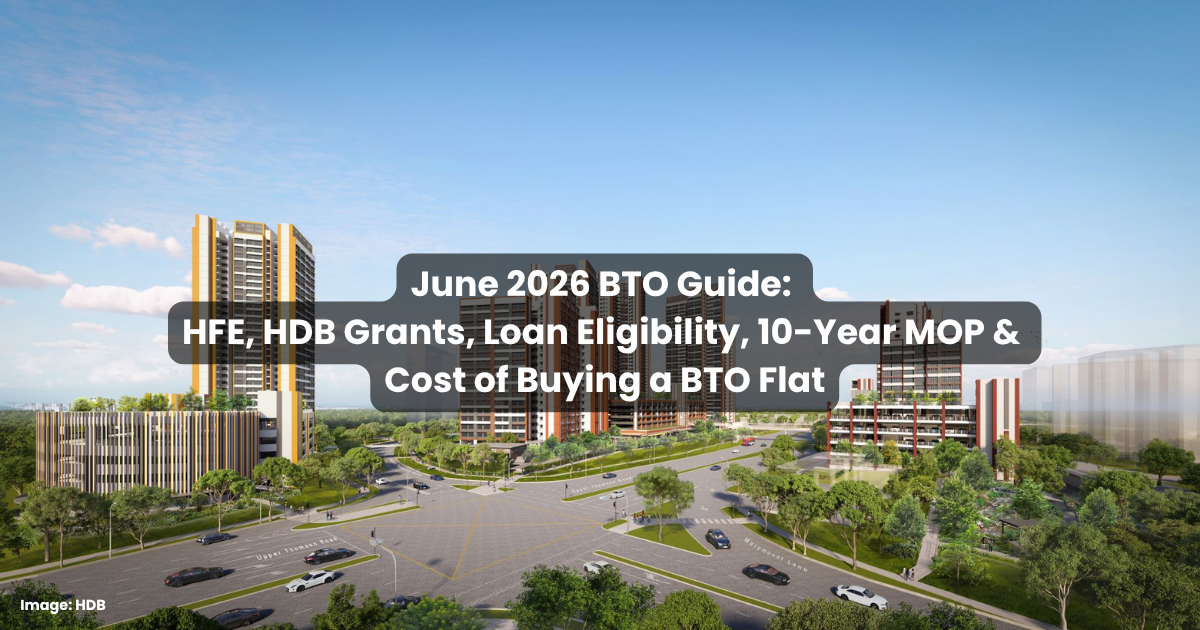
June 2026 BTO buyers must understand HFE applications, CPF grants, loan eligibility, 10-year MOP rules, resale levy implications, and financing options before committing to a new HDB flat purchase in Singapore.

Singapore’s new EC scheme changes in 2026 will reshape buyer demand, home loan affordability and future property prices. Here is a deep analysis of the new rules and their long term market implications.
Banks often reject co-living property home loans in Singapore due to higher risk, unstable income, and regulatory concerns. While some banks may still accept such cases, stricter conditions apply, and refinancing options may be limited in the future.

Strong sales at Vela Bay, Tengah Garden Residences, and Rivelle Tampines highlight resilient demand in Singapore’s property market. Rising PSF, flexible financing, and buyer confidence continue to drive new launches, even amid global uncertainty and evolving interest rate conditions.
In May 2026, choosing between fixed and floating home loan rates in Singapore depends on your risk appetite. While floating rates are lower now, rising inflation and global uncertainties may push rates higher, making fixed rates a safer option for some borrowers.
DINK couples in Singapore are increasingly buying private property, but high income does not guarantee mortgage approval or affordability. Understanding loan criteria, interest rate risks, and long-term financial planning is key before deciding to skip HDB in 2026.

The US–Iran conflict is indirectly pushing Singapore mortgage rates higher through rising oil prices and inflation. While floating rates remain low in 2026, fixed rates are increasing as banks price in uncertainty, with potential rate cuts only expected in 2027.
A high salary does not guarantee mortgage approval in Singapore. Banks assess income legitimacy, credit history, consistency, and employment stability. Understanding these factors is key to improving approval chances and avoiding unexpected loan rejections.
HPS is a mandatory mortgage insurance for HDB owners using CPF to service their loan. It ensures your outstanding loan is fully paid in case of death, disability, or terminal illness, protecting your family from losing the home.

Choosing the right mortgage involves more than just rates. With varying bank terms and changing market conditions, professional advisory ensures access to the best options, proper loan structuring, and avoids costly mistakes, helping homeowners stay financially efficient in a dynamic interest rate environment.
Cash Over Valuation (COV) occurs when a property's purchase price exceeds its official valuation. While COV does not increase your maximum home loan, it can significantly increase the amount of cash required upfront as the difference must be paid entirely in cash. Learn how COV affects your loan eligibility, CPF usage, Buyer’s Stamp Duty (BSD), Additional Buyer’s Stamp Duty (ABSD), and what to consider before committing to a resale property purchase in Singapore.
Why do different banks offer different mortgage rates in Singapore? Learn how funding costs, lending policies, income assessment, refinancing criteria and market strategies affect home loan rates and approvals.
Why do different banks offer different mortgage rates in Singapore? Learn how funding costs, lending policies, income assessment, refinancing criteria and market strategies affect home loan rates and approvals.

HDB Purchase: From choosing between Joint Tenancy and Tenancy in Common to understanding Essential Occupier rules, CPF usage, housing grants and bank loan options, these decisions can have long-term implications on your finances and future property plans. In this guide, we explore everything couples need to know about HDB joint housing loans in Singapore and how to choose the most suitable ownership and financing structure.