- Insights & Updates
Latest News

By Johnson Lo | Chief Analyst
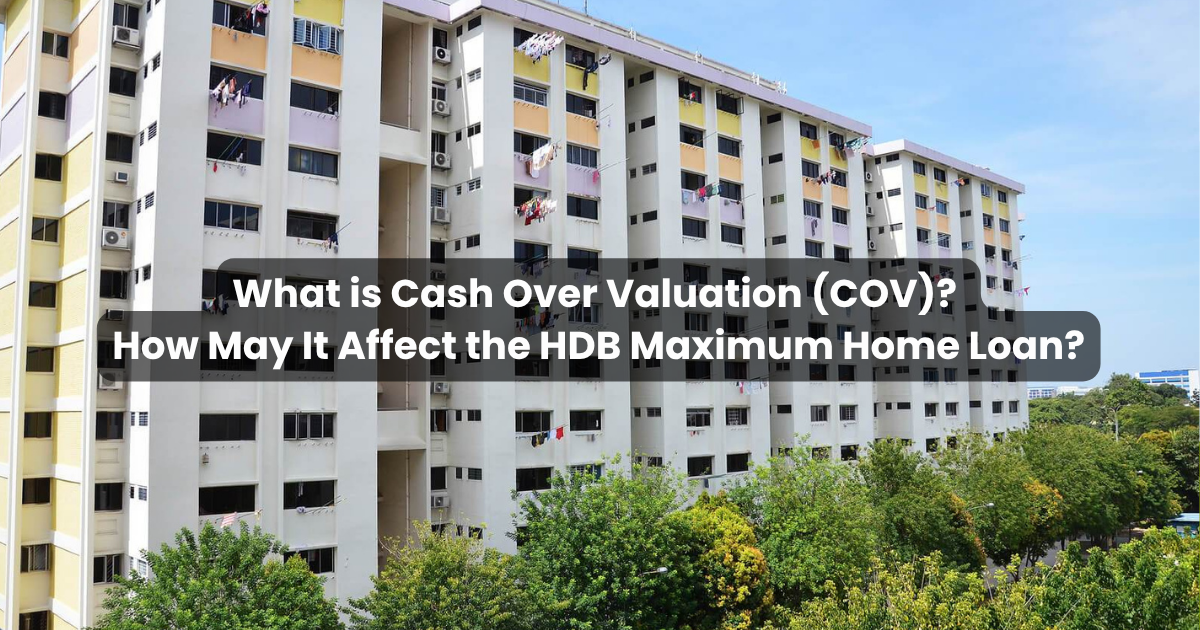
June 22, 2026If you are buying a resale HDB flat in Singapore, you may have come across the term “Cash Over Valuation” (COV). While COV was once a commonly discussed topic during the property boom years, it has become increasingly relevant again as demand for certain resale flats remains strong.
Many buyers are surprised when they discover that the agreed purchase price is higher than the flat’s valuation. This difference, known as Cash Over Valuation, can significantly affect the amount of cash required upfront, even though it does not necessarily increase the amount you can borrow.
In this article, we explain what COV is, how it affects your loan, how Buyer’s Stamp Duty (BSD) is calculated, and what buyers should consider before agreeing to pay a high COV.
What is Cash Over Valuation (COV)?
Cash Over Valuation (COV) refers to the difference between the agreed purchase price of a property and its official valuation.
For example:
- Purchase Price: $700,000
- HDB Valuation: $680,000
- COV: $20,000
In this scenario, the buyer has agreed to pay $20,000 above the property’s market valuation.
The key point is that this $20,000 must be paid entirely in cash and cannot be financed using CPF or a housing loan.
Why Does COV Exist?
COV usually occurs when demand exceeds supply.
Certain resale flats command a premium because of factors such as:
- Rare unit types
- High floor units
- Unblocked views
- Near MRT stations
- Popular schools
- Renovated condition
- Mature estates
- Limited supply
When multiple buyers compete for the same property, sellers may receive offers above valuation, resulting in COV.
How is the Valuation Determined?
For resale HDB purchases, buyers can only request a valuation after obtaining an Option to Purchase (OTP).
The valuation is conducted by HDB’s appointed valuers who assess factors such as:
- Location
- Floor level
- Remaining lease
- Size
- Recent comparable transactions
- Physical condition of the property
The valuation may be higher, lower, or equal to the agreed purchase price.
Does COV Affect My Maximum Loan?
This is one of the most common misconceptions among home buyers.
The short answer is:
No, COV does not increase your maximum loan.
Whether you are taking an HDB loan or a bank loan, the loan amount is generally calculated based on the lower of:
- Purchase Price, or
- Property Valuation
Example 1
Purchase Price: $700,000
Valuation: $680,000
Maximum Loan (75% Bank Loan):
75% × $680,000 = $510,000
Even though you are paying $700,000, the bank only lends based on the valuation of $680,000.
The additional $20,000 COV must be paid entirely in cash.
How Much Additional Cash Do I Need?
Let’s look at a practical example.
Purchase Price: $700,000
Valuation: $680,000
COV: $20,000
Bank Loan: 75%
Funds Required
Loan (75% of valuation): $510,000
Downpayment (25% of valuation): $170,000
COV: $20,000 cash
Total purchase price: $700,000
The buyer will therefore need an additional $20,000 cash beyond the normal downpayment requirements.
This catches many buyers by surprise.
Can CPF Be Used for COV?
No.
CPF can generally only be used towards:
- Downpayment
- Monthly instalments
- Legal fees
- Buyer’s Stamp Duty
However, CPF cannot be used for any amount above valuation.
Any COV must be paid entirely in cash.
This is one of the most important considerations when purchasing a resale property with a high COV.
How Does COV Affect Buyer’s Stamp Duty (BSD)?
Another common misconception is that BSD is always calculated based on valuation.
This is not true.
Buyer’s Stamp Duty is calculated based on the higher of:
- Purchase Price, or
- Market Valuation
Example
Purchase Price: $700,000
Valuation: $680,000
BSD is calculated based on $700,000.
This means buyers pay stamp duty on the full purchase price, including the COV portion.
In other words, not only must the buyer pay the $20,000 COV in cash, they also pay additional stamp duty because the purchase price is higher.
Does COV Affect Additional Buyer’s Stamp Duty (ABSD)?
Where ABSD applies, it is similarly calculated based on the higher of:
- Purchase Price, or
- Market Valuation
If the purchase price exceeds valuation, ABSD is calculated using the purchase price.
For buyers subject to ABSD, a higher COV may therefore result in higher stamp duties.
Can I Negotiate After Receiving the Valuation?
Technically, the purchase price is agreed before the valuation is known.
Once the OTP has been granted and exercised, renegotiation may be difficult unless both parties agree.
Therefore, buyers should be careful when offering significantly above recent transaction prices.
Understanding market values before making an offer can help reduce the risk of unexpectedly high COV.
What Happens if Valuation Comes in Lower Than Expected?
A lower valuation can affect affordability significantly.
Many buyers focus on monthly instalments but overlook the cash component.
A valuation shortfall may mean:
- Higher cash outlay
- Reduced liquidity
- Lower emergency funds
- Difficulty completing the transaction
It is therefore important to maintain sufficient cash reserves before committing to a purchase.
Is Paying COV Always Bad?
Not necessarily.
Some buyers willingly pay COV because:
- The unit is rare.
- The location is highly desirable.
- Comparable units are difficult to find.
- The long-term value justifies the premium.
- They intend to stay for many years.
In such cases, paying a reasonable COV may make sense.
The key is understanding the financial implications before proceeding.
How Much COV is Considered Reasonable?
There is no fixed answer.
A reasonable COV depends on:
- Recent transactions nearby
- Flat attributes
- Market conditions
- Buyer’s financial strength
Generally, buyers should avoid stretching their finances simply to secure a property.
A slightly lower purchase price may preserve cash for renovations, emergency funds, investments, and future financial needs.
Key Considerations Before Paying COV
Before committing to a property with COV, consider the following:
1. Do You Have Enough Cash?
Remember that COV cannot be funded using CPF or housing loans.
2. Will You Still Have Emergency Savings?
Avoid using all available cash for the purchase.
3. How Does It Affect Renovation Budget?
Many buyers forget to budget for renovation costs after paying COV.
4. Are Comparable Flats Selling at Similar Prices?
Review recent transactions to determine whether the premium is justified.
5. Does the Property Suit Your Long-Term Plans?
Paying COV may be more acceptable if you intend to hold the property for many years.
Final Thoughts
Cash Over Valuation is not necessarily a bad thing, but buyers should fully understand its implications before proceeding.
The most important point to remember is that COV does not increase your loan eligibility. Housing loans are generally based on the lower of the purchase price or valuation, while any amount above valuation must be paid entirely in cash.
In addition, Buyer’s Stamp Duty and Additional Buyer’s Stamp Duty are calculated based on the higher of the purchase price or valuation, which may further increase acquisition costs.
Before committing to any resale purchase, it is advisable to assess your financing options carefully, understand your cash requirements, and ensure that the property remains affordable even if the valuation comes in lower than expected.
Do check out Singapore’s latest home loan rates here. We have the lowest rates 2026 for you to compare across all 16 banks in Singapore, for free.