
- Insights & Updates
Latest News

By Johnson Lo | Chief Analyst
May 4, 2026In April 2026, Singapore’s private property market sent a very clear message, demand remains strong, decisive, and largely driven by local buyers. Despite higher prices, a more uncertain global environment, and interest rates that are no longer at historic lows, recent new launches have performed exceptionally well.
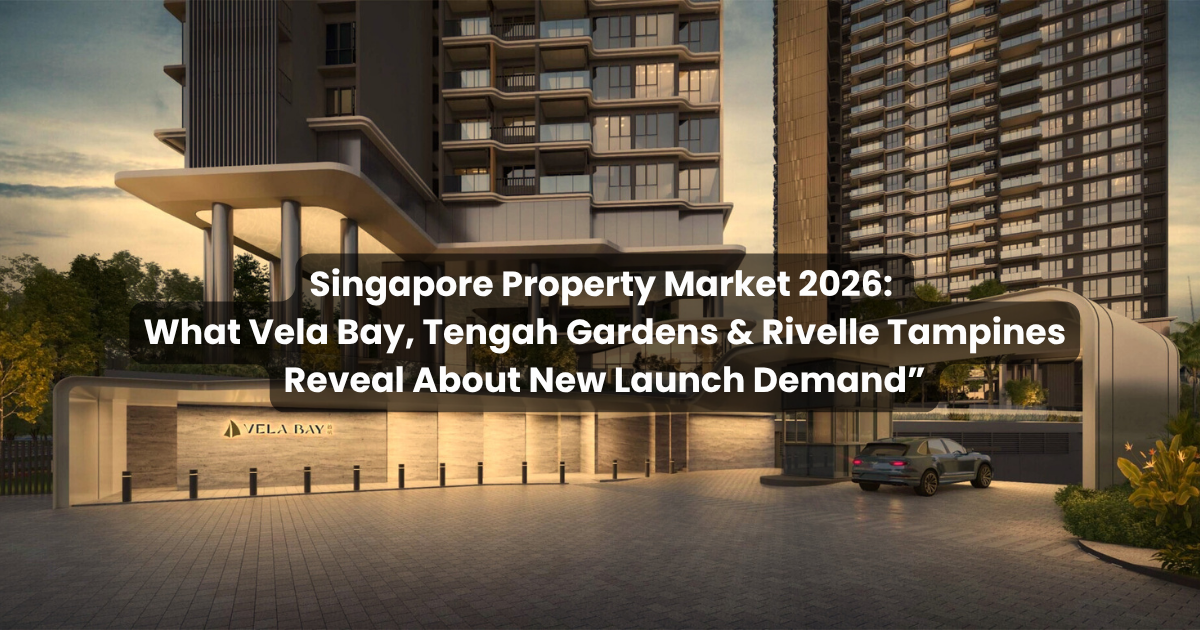
Projects such as Rivelle Tampines, Tengah Garden Residences, and Vela Bay have recorded rapid take-up rates within a short period of time. Rivelle Tampines was fully sold with all 572 units taken up, Tengah Garden Residences moved close to 99% of its inventory, while Vela Bay achieved more than 70% sales within its launch weekend. Across these launches, more than 1,200 units were transacted almost immediately.
This is not a coincidence, nor is it simply the result of aggressive marketing. It reflects something deeper, confidence in the Singapore property market remains intact, and buyers are still willing to commit at today’s price levels. The more important question is not whether demand exists, but rather what is driving this demand, and what it means for buyers considering entry into the market now.
Strong Take-Up Rates Reflect Underlying Market Confidence
The speed at which these projects sold is significant because it reveals how buyers are behaving in the current environment. Property purchases, especially private residential properties, are not impulsive decisions. They involve large financial commitments, long-term planning, and careful consideration of risk. When hundreds of units are absorbed within days, it suggests that buyers are not only prepared, but confident enough to act.
More importantly, the composition of buyers provides an additional layer of insight. For developments like Vela Bay, approximately 90% of buyers were Singaporeans, with a smaller proportion of permanent residents and minimal foreign participation. This indicates that the demand is not being artificially driven by speculative foreign capital, but rather by genuine local demand.
This matters because a market supported by local buyers tends to be more stable. It is less vulnerable to sudden shifts in external capital flows and reflects underlying household formation, upgrading needs, and long-term ownership intentions. In other words, the strength observed in these launches is not superficial, it is structural.
PSF Trends: A Shift in Price Expectations
One of the most important observations from these launches is the continued upward movement in price per square foot (PSF), particularly in the Outside Central Region (OCR). Traditionally, OCR projects were seen as entry-level options, offering relatively more affordable pricing compared to the Rest of Central Region (RCR) and Core Central Region (CCR).
However, recent launches are challenging this assumption. OCR developments are now approaching, and in some cases exceeding, the $2,800 to $3,000 PSF range. Premium units within these projects have achieved even higher benchmarks. At Vela Bay, a penthouse unit was reportedly transacted at approximately $3,303 PSF, with a total price of $5.83 million.
This is a meaningful shift. It suggests that buyers are recalibrating their expectations of value and are increasingly willing to pay for factors such as location, concept, connectivity, and overall development quality. The traditional gap between OCR, RCR, and CCR pricing is narrowing, not necessarily because central region prices are falling, but because OCR prices are rising.
For buyers, it reinforces the idea that waiting for prices to revert to previous benchmarks may not be realistic. Secondly, it highlights the importance of entering the market with a clear understanding of long-term affordability rather than relying on historical pricing assumptions.
Why Buyers Continue to Enter Despite Higher Prices
Given the upward trend in PSF, it is reasonable to ask why buyers are still entering the market at these levels. The answer lies not just in pricing, but in the structure of new launch purchases, particularly for Building Under Construction (BUC) projects.
BUC developments operate under a progressive payment scheme, which significantly changes the financial dynamics of property ownership. Instead of servicing a full loan immediately, buyers pay in stages as the project progresses. This means that the initial financial commitment is much lower, as only a portion of the loan is disbursed at the early stages of construction.
This structure offers several advantages. It reduces immediate cash flow pressure, allowing buyers to enter the market without committing to full monthly repayments upfront. It also provides flexibility, especially for upgraders who may need time to sell their existing property. More importantly, it allows buyers to spread out their financial commitment over several years, which can be particularly valuable in an environment where interest rates are uncertain.
This is one of the key reasons why new launches remain attractive even as prices rise. Buyers are not simply evaluating the total purchase price, they are assessing how the payment structure aligns with their current financial position.
Current Financing Conditions Remain Supportive
The financing environment in Singapore continues to play a supportive role in sustaining demand. While interest rates have increased from their historical lows, loan structures remain relatively competitive and flexible.
For a typical loan size of around $1 million, borrowers are able to secure packages pegged to 1 or 3 month SORA with spreads of approximately 0.20%, EIR 1.20%. This translates into manageable interest costs in the current environment. In addition, certain loan features, such as full waivers in the event of a property sale, including undisbursed loan amounts that provide an added layer of flexibility. Although Seller’s Stamp Duty still applies within the first four years, these structures allow borrowers to retain optionality.
These factors collectively lower the barrier to entry. Buyers are not only able to secure financing at reasonable rates, but also benefit from loan structures that accommodate changes in personal circumstances.
The Influence of Global Factors on Local Decisions
While local demand remains strong, it is important to recognise that global developments continue to shape the broader economic environment. The ongoing US–Iran conflict has contributed to rising oil prices, which in turn affects global inflation.
Higher fuel costs increase transportation and production expenses, which are eventually passed on to consumers. This creates upward pressure on inflation. In Singapore, inflation currently stands at approximately 1.7%, which remains relatively moderate. However, the concern lies in future inflation expectations rather than current levels.
If inflation rises further, central banks may delay interest rate cuts or maintain higher rates for longer. This has implications for borrowing costs, as mortgage rates are influenced by global liquidity conditions. As a result, buyers are increasingly aware that waiting may expose them to higher financing costs in the future.
This awareness contributes to the current momentum in the market. Buyers are not only reacting to present conditions, but also positioning themselves ahead of potential changes.
Market Psychology: Enter Now or Pay More Later
Beyond financial considerations, market psychology plays a significant role in driving demand. The rapid take-up rates of recent launches reinforce a sense of urgency among buyers. When buyers observe that units are being absorbed quickly and prices are trending upwards, there is a natural inclination to act sooner rather than later.
This does not mean that all buyers are acting irrationally. Rather, it reflects a pragmatic assessment of market conditions. If prices continue to rise and supply remains limited, delaying a purchase may result in higher entry costs in the future.
However, it is important to approach this sentiment with caution. While the market may be strong, decisions should still be grounded in individual financial capacity and long-term planning.
Understanding the Financial Commitment
For buyers entering the private property market, understanding the required downpayment is essential. Typically, a 25% downpayment is required, with at least 5% in cash and the remaining portion payable through CPF or cash.
For a property priced at $2 million, this translates into approximately $100,000 in cash and $400,000 in CPF or cash. While this is a significant commitment, the progressive payment structure of BUC projects means that the loan component is drawn down gradually, reducing immediate financial strain.
Nevertheless, buyers should not underestimate the overall commitment. Beyond the purchase price, additional costs such as stamp duties, legal fees, and renovation expenses must also be considered. A clear understanding of total financial exposure is critical before making a decision.
Is This a Strong Market or a Risky Entry Point?
The performance of recent launches suggests that the market is currently strong and supported by genuine demand. However, strength does not eliminate risk. Buyers must still consider factors such as interest rate movements, income stability, and exit strategies.
Entering the market purely based on momentum can lead to overextension. The key is to balance opportunity with prudence, ensuring that the purchase aligns with both current affordability and future financial resilience.
Final Thoughts
The success of Rivelle Tampines, Tengah Garden Residences, and Vela Bay is not an isolated event. It reflects broader trends within the Singapore property market, including strong local demand, rising price benchmarks, and continued confidence in long-term value.
At the same time, the evolving interest rate environment and global uncertainties require buyers to adopt a more thoughtful approach. The decision to enter the market should not be driven solely by current demand or pricing trends, but by a clear understanding of one’s financial position and long-term goals.
Why Professional Advisory Matters
In a market where both opportunities and risks are present, navigating property decisions requires more than just market observation. Loan structures, financing options, and long-term flexibility all play a critical role in determining the success of a property purchase.
Different banks offer varying terms, and these differences can have significant implications over time. Selecting the right loan structure is not just about securing approval, it is about ensuring that the financing arrangement remains suitable as circumstances evolve.
Fairloan Mortgage Advisory, Singapore’s largest mortgage advisory, works closely with clients to assess affordability, compare financing options, and structure loans that align with individual risk profiles. By doing so, buyers are better positioned to make informed decisions and navigate the market with confidence.
Rates offered by Banks
- 1 or 3 month SORA + 0.20% = 1.20%
- FHR6 + 0.45 = 1.25%
Check out the latest rates here or contact us if you need further advise.
Latest Posts

Explore related content by topic
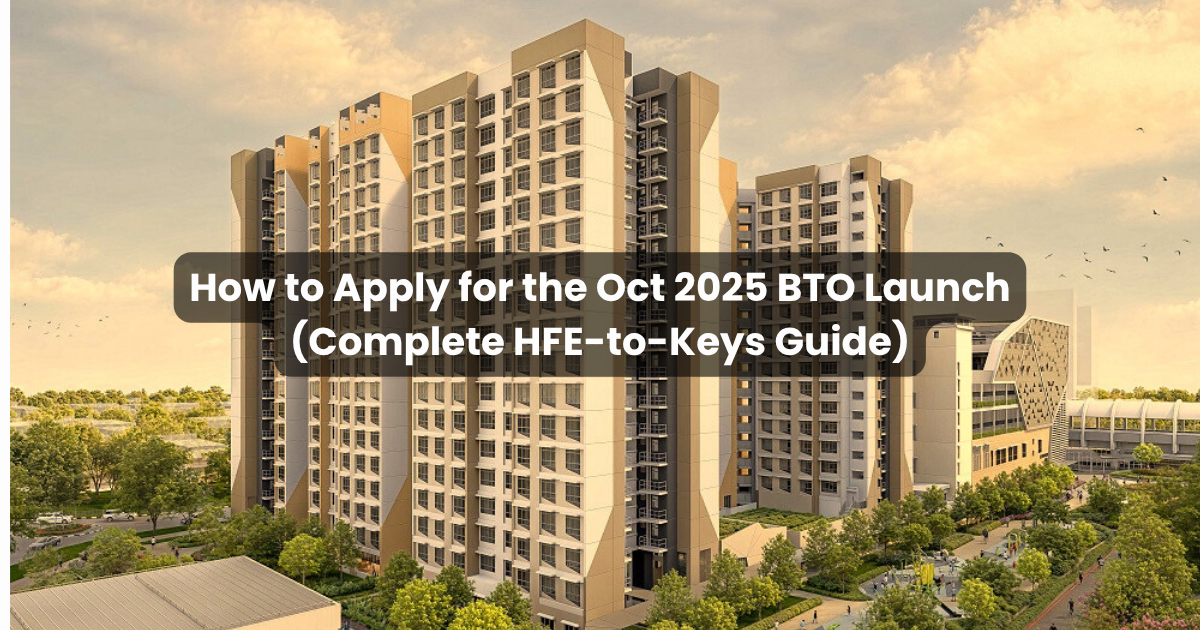
How to Apply for the Oct 2025 BTO Launch (Complete HFE-to-Keys Guide)
Planning to throw your hat into the ballot for HDB’s October 2025 BTO? Here’s a clear, step-by-step guide—from getting your HFE letter to booking your flat—plus fees, required documents, grants, loan limits, and when a bank loan might make sense.

What Happens to Your Home Loan If a Co-Owner Passes Away in Singapore?
Insights & Updates Latest News It’s a question that few homeowners want to think about,