
- Insights & Updates
Latest News

By Johnson Lo | Chief Analyst
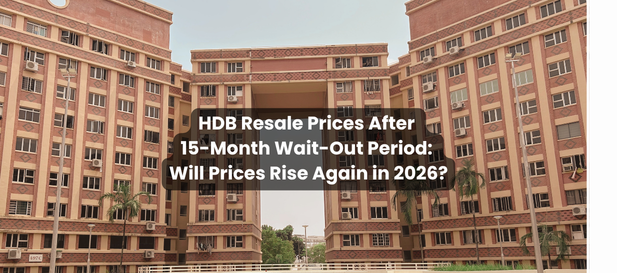
September 27, 2026Singapore’s HDB resale market is entering an interesting new phase.
On 25 September 2026, The Business Times reported on a National University of Singapore (NUS) Institute of Real Estate and Urban Studies survey which found that 82% of property industry respondents expect HDB resale prices either to moderate or experience only a modest recovery following the removal of the 15-month wait-out period for private property owners.
At first glance, this appears to suggest that removing the restriction will have little impact on HDB prices.
But the actual findings are more nuanced.
About 41% of respondents expect HDB resale prices to moderate or soften, while another 41% expect a modest recovery, partly because former private homeowners can return to the HDB resale market and “inject fresh demand”.
For those expecting a recovery, the anticipated increase is generally less than 1% per quarter.
So the question is not simply whether HDB prices will rise.
A more useful question is:
Which HDB flats could benefit from this additional demand, and will increasing housing supply be enough to offset it?
To understand where the HDB resale market could be heading, we need to look beyond one policy change and examine three major forces shaping the market.
1. The 15-Month Wait-Out Period Is Gone. But 2026 Is Very Different From 2021 and 2022
The 15-month wait-out period was introduced in September 2022 as part of a package of property cooling measures.
Under the rule, most private residential property owners who sold their private home had to wait 15 months before they could purchase a non-subsidised HDB resale flat.
The intention was straightforward: reduce additional demand entering an already rapidly rising HDB resale market.
And the market at that time was indeed very different.
Based on HDB’s Resale Price Index (RPI), resale prices rose approximately:
Year | HDB Resale Price Growth |
2021 | +12.7% |
2022 | +10.4% |
2023 | +4.9% |
2024 | +9.7% |
2025 | +2.9% |
Q1 2026 | -0.1% q-o-q |
Q2 2026 | -0.3% q-o-q |
The difference between 2022 and today is important.
HDB resale prices had been increasing by double digits when the wait-out period was introduced.
By contrast, HDB reported that prices fell 0.1% in Q1 2026 and another 0.3% in Q2 2026, the first two consecutive quarterly declines in several years.
Transaction volumes are also softer.
There were 6,396 resale transactions in Q2 2026. While this was slightly higher than Q1, it was 9.9% lower than the same quarter in 2025.
For the whole of 2025, HDB resale volume fell 9.7% from 28,986 transactions in 2024 to 26,169 transactions.
The wait-out rule was never the only factor affecting prices
There is another interesting piece of evidence.
The 15-month wait-out period remained firmly in place throughout 2024.
Yet HDB resale prices still increased by 9.7% that year.
This tells us something important.
The wait-out period can affect demand, but it does not independently determine where HDB prices go.
Prices are influenced by many factors, including:
- available resale supply;
- number of flats reaching Minimum Occupation Period (MOP);
- BTO supply and waiting times;
- mortgage interest rates;
- household income growth;
- buyers’ housing preferences;
- loan-to-value limits;
- affordability; and
- availability of alternative housing such as BTO flats and ECs.
Therefore, removing the 15-month rule does not automatically mean Singapore will return to the rapid HDB price increases seen in 2021 or 2022.
The underlying market conditions today are substantially different.
But it is still too early to declare that the policy has had no effect
There is one caveat.
The Government announced the removal of the 15-month wait-out period on 27 July 2026.
The latest complete official HDB quarterly price data currently available is for Q2 2026, which ended before the policy was removed.
That means the -0.3% Q2 price movement cannot be used as evidence that removing the restriction has not affected prices.
We will need Q3, Q4 and potentially early-2027 transaction data before drawing stronger conclusions.
The NUS findings should therefore be viewed primarily as an industry outlook rather than evidence of the policy’s final market impact.
2. Instead of an HDB-Wide Boom, Singapore Could Develop a “Two-Speed” Resale Market
This may ultimately be the most important point.
The overall HDB Resale Price Index can remain relatively stable while certain types of flats continue appreciating.
The NUS survey highlighted this possibility.
According to The Business Times, around 55% of respondents expect private homeowners moving into HDB flats to spread their demand across four- and five-room suburban flats.
Nearly one-quarter expect stronger interest in larger legacy flats such as:
- Executive Apartments;
- Executive Maisonettes;
- jumbo flats; and
- other larger or premium HDB units.
This makes economic sense when we consider who these new buyers may be.
A private homeowner downgrading may not be looking for the cheapest HDB
Consider a homeowner who sells a private property for S$1.8 million and has accumulated substantial equity.
Their objective may be to unlock some housing wealth for retirement, investment or other family needs.
But that does not necessarily mean they want to move into a S$450,000 three-room flat.
Instead, they could sell their private property and purchase:
- a S$750,000 five-room HDB;
- a S$900,000 newer flat in a mature estate;
- a S$1 million Executive Apartment; or
- a S$1 million-plus rare or centrally located flat.
They would still release a substantial amount of capital while maintaining relatively generous living space.
This creates a very different buyer profile from a first-time couple borrowing close to their maximum affordable mortgage.
Million-dollar HDB transactions are already rising despite an overall softer market
The numbers illustrate this divergence.
According to ERA Research using HDB transaction data, 491 HDB flats changed hands for at least S$1 million in Q2 2026.
That was:
- 19.5% higher than Q1 2026;
- 18.3% higher than Q2 2025; and
- approximately 7.7% of all resale transactions during the quarter.
There were already 902 million-dollar HDB transactions in the first half of 2026.
Yet during this same period, the overall HDB Resale Price Index declined.
This shows why headlines concerning million-dollar HDB transactions need context.
Both of the following statements can be true at the same time:
Overall HDB resale prices are stabilising.
and
Million-dollar HDB transactions are becoming more common.
They represent different parts of the market.
ERA’s Q2 analysis also found that roughly 71% of resale transactions remained below S$750,000.
So million-dollar flats attract considerable attention, but they still represent a minority of Singapore’s resale market.
Location, age and scarcity may increasingly matter more
This could lead to what we would describe as a two-speed HDB market.
On one side:
Typical older or suburban HDB flats
More price-sensitive buyers, greater competition from BTO flats and increasing resale supply could keep price growth relatively restrained.
On the other:
Newer, larger, rarer or better-located flats
These properties could continue attracting strong demand from buyers who value size, remaining lease, transport connectivity, schools or proximity to the city.
This segment could also benefit disproportionately from private homeowners entering the HDB market.
Therefore, looking only at Singapore’s overall HDB RPI could increasingly conceal substantial differences between towns, flat types and individual developments.
For buyers, recent transactions in the same block, flat type and surrounding area may become more useful than simply asking whether “HDB prices are rising”.
3. More MOP Flats and Higher BTO Income Ceilings Could Counter the New Demand
If removing the wait-out period increases demand, Singapore is simultaneously introducing significantly more housing supply and giving more households alternatives to resale flats.
This is probably the strongest argument against another broad-based HDB price surge.
A large wave of flats is reaching MOP
The Government expects approximately:
Year | BTO Flats Reaching MOP |
2025 | 8,000 |
2026 | 13,500 |
2027 | 15,000 |
2028 | 19,500 |
From 2025 to 2028, the annual number of BTO flats reaching MOP could therefore more than double.
Not every owner whose flat reaches MOP will sell.
But a larger pool of MOP flats means a larger potential supply of relatively young resale flats entering the market.
These units may be particularly attractive because many still have more than 90 years of lease remaining and allow buyers to move in without waiting several years for a BTO flat to be built.
Greater supply naturally gives buyers more choice and can limit sellers’ ability to continually push asking prices higher.
Higher BTO income ceilings create another alternative
From 24 August 2026, the monthly household income ceiling for eligible families seeking subsidised HDB housing was increased from:
$14,000 to $16,000
For eligible singles:
$7,000 to $8,000
The income ceiling for qualifying new Executive Condominium purchases was also raised:
$16,000 to $18,000
This change could have an understated impact on resale demand.
Take a household earning S$15,000 monthly.
Previously, they exceeded the S$14,000 BTO income ceiling.
Depending on their circumstances, they may have concentrated their search on an HDB resale flat, EC or private condominium.
With the higher income ceiling, BTO housing potentially becomes another option.
Likewise, some higher-income households can now consider a new EC.
Economists call this a substitution effect.
If consumers are presented with more housing choices, some demand that would otherwise have entered the HDB resale market can be redirected elsewhere.
However, BTO and resale flats are not perfect substitutes
This is where we should be careful.
A household that needs a home immediately may not want to wait several years for a BTO flat.
Someone who specifically wants to stay near their parents, children’s school or workplace may also prefer resale.
Others may value being able to inspect the actual unit, floor level, facing and surroundings before buying.
Therefore, higher BTO eligibility is unlikely to remove resale demand.
It should instead reduce some demand at the margins.
Combined with increasing MOP supply, however, this may be enough to absorb some of the additional demand created by private homeowners returning to the resale market.
What About Singapore’s Private Property and Rental Markets?
The removal of the wait-out period could have consequences beyond HDB prices.
Previously, a private homeowner who sold their property and intended to purchase an HDB resale flat could potentially require interim accommodation during the 15-month waiting period.
Removing that requirement reduces the need for such temporary rentals.
The NUS survey reported by The Business Times found that almost 23% of respondents expect interim rental demand to decline.
At the same time, qualifying private homeowners who purchase an HDB resale flat are required to dispose of their private property within the applicable period.
Around 40% of NUS survey respondents expect this to increase private resale listings.
This creates an interesting possibility.
A policy change which increases demand for certain HDB resale flats could simultaneously:
increase private resale supply
and
reduce some rental demand.
The effects are unlikely to transform Singapore’s entire private residential market, as this group represents only one segment of homeowners.
Nevertheless, the direction is worth monitoring, particularly in the Outside Central Region where many mass-market private condominiums are located.
So, Will HDB Resale Prices Rise in 2026 and 2027?
There are presently strong forces working in both directions.
Factors supporting prices
- Removal of the 15-month wait-out period introduces additional buyers.
- Private homeowners may have significant housing equity.
- Larger and premium HDB flats remain relatively scarce.
- Newer MOP flats with long remaining leases continue to attract demand.
- Lower mortgage rates, if sustained, can improve housing affordability.
Factors limiting price growth
- HDB resale prices have already softened for two consecutive quarters.
- Overall resale transaction volumes remain below 2025 levels.
- 13,500 BTO flats are expected to reach MOP in 2026.
- MOP supply is expected to increase further in 2027 and 2028.
- Higher BTO and EC income ceilings give more buyers alternatives.
- Existing property cooling measures and financing restrictions remain in place.
Our view is therefore that the removal of the 15-month wait-out period alone is unlikely to recreate the broad HDB boom experienced in 2021 and 2022.
However, that does not mean every HDB segment will behave similarly.
The more important trend to watch may be an increasing divergence between ordinary resale flats and highly sought-after properties.
Newer flats, large Executive Apartments, maisonettes, jumbo flats and units in prime or mature locations could continue achieving stronger prices even if Singapore’s overall HDB resale index remains relatively stable.
The next few quarters will therefore be particularly important.
Q3 and Q4 2026 transaction data should provide the first meaningful indication of how much genuine demand has returned following the July policy change.
What Should HDB Buyers Do?
For buyers, trying to perfectly time the HDB market can be difficult.
Instead of focusing only on whether the overall resale index will increase or decrease by 1% or 2%, buyers should consider:
- recent transactions for comparable flats;
- remaining lease;
- valuation;
- cash-over-valuation risk;
- available CPF funds;
- grants;
- mortgage affordability;
- interest rate;
- monthly repayment; and
- how long they intend to keep the property.
Financing can make a substantial difference to the overall cost of purchasing a home.
A lower purchase price does not automatically mean a better deal if the mortgage structure is unsuitable, while a slightly higher-priced property may remain manageable with proper financial planning.
Buyers intending to use a bank loan should therefore calculate their financing position before committing to an Option to Purchase.
Final Thoughts: Stability Does Not Mean Every HDB Will Behave the Same
The NUS survey provides a useful message for buyers worried that removing the 15-month wait-out period will immediately cause HDB prices to surge.
The current market does not resemble the extremely tight environment of 2021 and 2022.
Price growth has slowed substantially, transaction volumes are softer and a large pipeline of BTO flats will progressively enter the resale market.
At the same time, dismissing the policy change as insignificant may also be premature.
Private homeowners returning to the HDB market bring additional purchasing power, and this demand may be concentrated disproportionately in larger, newer and better-located flats.
The question for 2026 and 2027 may therefore be less:
“Will HDB prices rise?”
and more:
“Which parts of the HDB market will outperform the rest?”
That distinction will matter increasingly for both homebuyers and sellers.
Planning to Buy an HDB Resale Flat?
Before committing to your next home, understanding your mortgage options and maximum loan eligibility can help you establish a realistic budget.
FairLoan Mortgage Advisory assists homebuyers in comparing mortgage packages across banks and understanding their financing options before making a property purchase.
Whether you are purchasing your first HDB resale flat, right-sizing from private property, refinancing an existing mortgage or assessing your next property purchase, speak with us to review the available financing options based on your circumstances.
This article is for general information and does not constitute financial or investment advice. Property and mortgage conditions may change, and buyers should assess their individual financial circumstances before making a property decision.
Sources: The Business Times, National University of Singapore Institute of Real Estate and Urban Studies (IREUS), Housing & Development Board (HDB), Ministry of National Development (MND), and publicly available HDB resale transaction data.
Latest Posts

Explore related content by topic
A bank rejection does not always mean you are ineligible for a home loan. Income structure, debt ratios, credit profile, and bank-specific policies all matter. Understanding these factors and securing an IPA early can significantly improve approval chances.
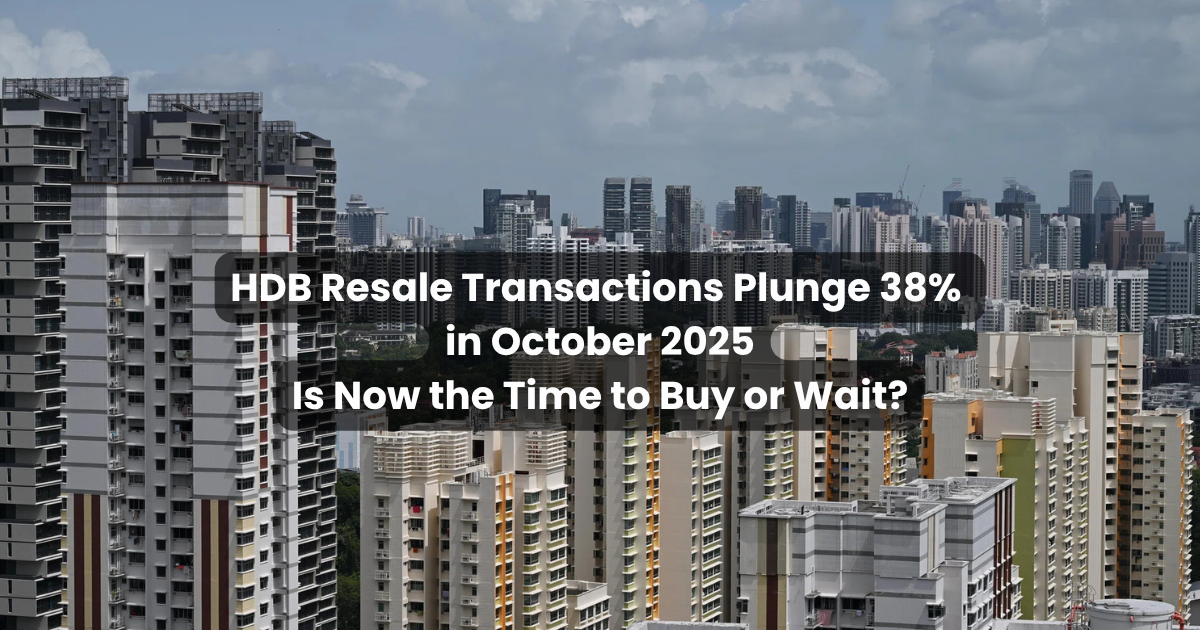
HDB Resale Transactions Plunge 38% in October 2025—Is Now the Time to Buy or Wait?
HDB resale transactions plunged 38% in October 2025 — the lowest since 2020. While volumes dipped, prices only softened slightly. Fairloan analyses whether this signals a buying opportunity amid rate cuts and new launches, and how sellers should position in a cautious market.