
Should I Choose Fixed or Floating Rate in 2026? A Complete Guide for Singapore Homeowners
Choosing between a fixed or floating home loan in 2026 depends on your risk appetite. With rates stabilising around 1.3%–1.5%, fixed packages offer long-term certainty while floating SORA plans suit borrowers expecting slight rate dips.
Singapore Home Loan Interest Rate Forecast 2026: Will Rates Drop Further After the Latest 2025 December Fed Cut?
The final interest rate cut from the US Federal Reserve in December 2025 has sparked a familiar question among Singapore homeowners: Will SORA continue to fall in 2026, and should borrowers switch to fixed, floating, or hybrid home loans now?
HFE Letter 2026: Requirements, Income Checks & Approval Tips (Updated Guide)
If you are planning to apply for a BTO or resale flat in 2025, the HDB Flat Eligibility (HFE) letter is now the first and most important step in your home-buying journey. Introduced as part of HDB’s effort to simplify and streamline the application process, the HFE letter replaces multiple assessments that buyers previously had to complete separately.
HDB Income Ceiling 2025/2026 Explained: Complete Guide for BTO and Resale Buyers
Insights & Updates Latest News The income ceiling has become more than just a number. For many young couples, it determines whether they can afford a subsidised BTO, whether they qualify for CPF grants, and whether they will have to stretch further for a resale flat instead. As salaries in Singapore climb, particularly in certain […]
HDB Loan vs Bank Loan: Which Is Better in 2025/2026?
Recent months have seen banks offering some of the lowest fixed packages in years, with several major lenders including DBS, UOB and OCBC rolling out five-year fixed rates around 1.78%
Why Is My IPA So Low? The Real Reasons Your Home Loan Approval Is Smaller Than Expected
Wondering why your IPA (In-Principle Approval) is so low? This 2025 expert guide explains hidden reasons your home loan approval is smaller than expected, including credit bureau timing, bank policies, stress-test interest rates, variable income haircuts, TDSR issues, and how to increase your loan eligibility legally
Property Tax in Singapore 2025: How It’s Calculated for HDB & Private Homes
A complete 2025 guide on how property tax is calculated for HDB and private properties in Singapore. Learn the difference between owner-occupied and non-owner-occupied rates, how Annual Value (AV) affects your bill, how to update your property classification with IRAS, and the penalties for wrong declarations.
When Dreams Meet Reality: Can BTO Flats Still Meet Rising Expectations? A Housing Advisor’s Honest Take on Trade-Offs, Affordability and the New HDB Landscape
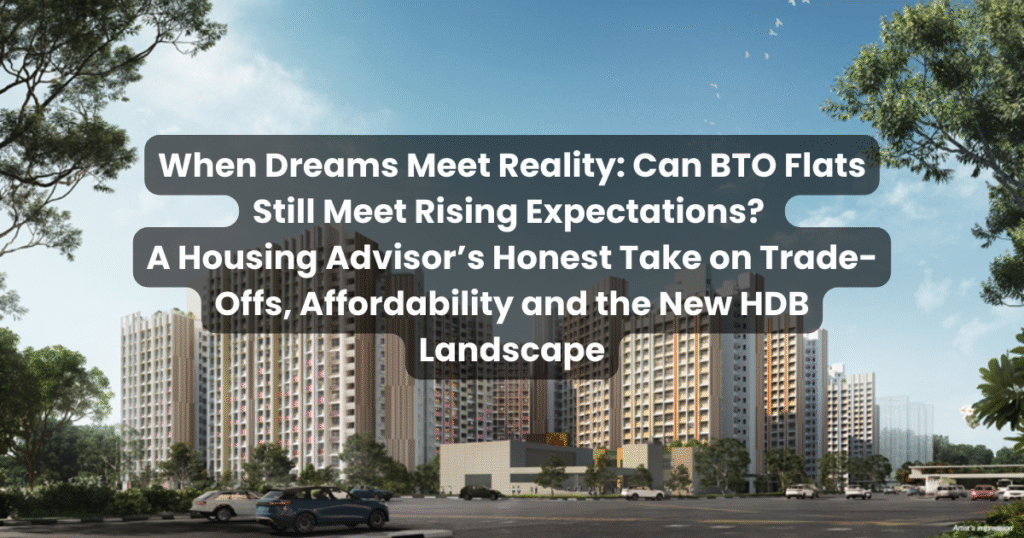
As young Singaporeans push for affordable, central, and amenity-rich BTO homes, expectations collide with market realities. A housing advisor breaks down the evolving Standard–Plus–Prime system, rising competition, affordability concerns, and the strategic decisions every homebuyer must make.
What Happens to Your Home Loan If a Co-Owner Passes Away in Singapore?

Insights & Updates Latest News It’s a question that few homeowners want to think about, but one that’s extremely important. When you co-own a property with your spouse, sibling, or parent, what actually happens if one co-owner passes away? In Singapore, the outcome depends on several key factors: The type of home ownership (Joint […]
Mortgage Loan with Parents as Co-Borrowers: Rules, CPF & ABSD Explained
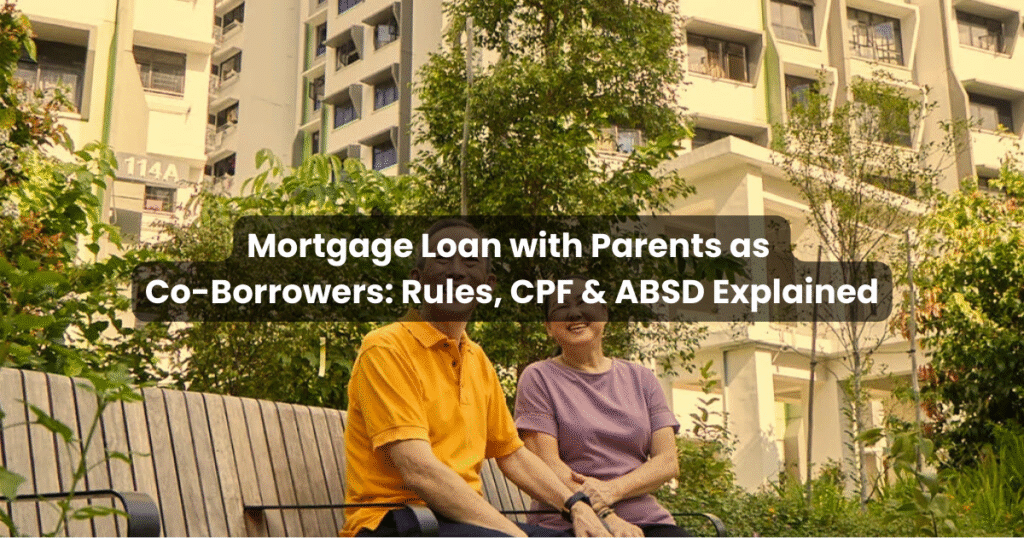
Adding parents as co-borrowers can increase your mortgage loan eligibility — but it may trigger ABSD or CPF restrictions if they’re co-owners. Fairloan explains how to structure ownership and borrowing smartly to maximise approval while avoiding unnecessary taxes.